
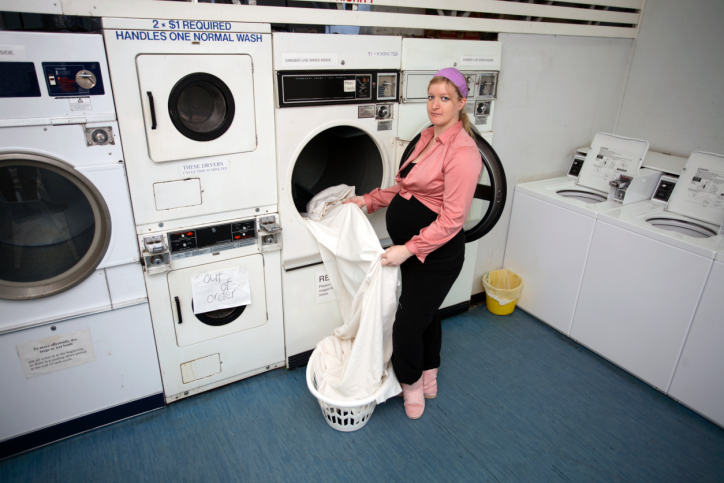
Case Study: Laundromat
This is a true story of one of my assignments regarding a Laundromat in Los Angeles County. This story has turned out to be one of the most fascinating tales I have ever heard.
I was not brought in before the purchase but 3 years later when problems arose to be an expert witness.
Who knows the truth about the Profit & Loss Statement?
Every “expert” (Laundromat broker, and experienced buyer) claims they can confirm the sales volume based on water and gas usage. I never take such a limited view, because it is too simplistic and it is too easy to get stung. When doing due diligence on coin laundries or any business for that matter, we have to remember the sellers are much more knowledgeable about their business than we are. That includes buyers and consultants, including myself.
So let’s get to the story. Here is a good one for the books on coin laundries. The broker, not the seller, made up a simple pro forma financial statement to use for his marketing. No where in the deal did the seller validate or invalidate what the broker published. Pro forma P & L statements are ones where the expenses are estimated and not based on facts. Pro formas presented by sellers always are missing many miscellaneous. expenses the seller forgot to list. Payroll taxes, business license, advertising, and cash payroll are just a few common ones.
Since the utilities are easily documented, this exact number is always used rather than an estimate; the income is handled much the same. Other types of businesses – not coin laundries, are handled differently during due diligence. The seller figures out what he does in sales in his better months and multiplies that number by twelve. With a coin laundry the numbers reported as gross sales could be based on anything or nothing.
In this situation, I do not know where the income estimate came from, but I know it did not come from the sellers actual collections. It might have come out of the brokers head, but that is a decision a judge will have to make. Where would the broker get an income number to use on his promotional material? Well, if he is an experienced coin laundry broker he would work backwards from the utility bill. Given the utilities were known, a reliable estimate can usually be made of the gross income. The key word is usually.
Let us proceed to tell the story. Mr. Cambique the buyer, comes along and is told that the seller has not disclosed the income, but the broker estimated the numbers based on the utility bills. The buyer knowing he must hire an expert to assist with the due diligence hires another coin laundry broker to verify and explain with the due diligence process and verify the income and expenses.
So based on the utilities, a deal was struck, and escrow was closed. The buyer shortly found out the income was not as expected but did not know why, since the utility expenses were in line with the listing broker’s estimate. The buyer now very unhappy believes the seller lied to him. His problem is, why are the utilities so high if the volume is not where it is supposed to be?
Two years later, the buyer brings in a water engineer who checks all the water lines. No one could believe what he finds. Two stations where the washing machines had been removed years ago, still had the hot water lines connected and the water was running into the sewer. The pipe usually, coming out of the wall goes into the washer and then comes out of the washer and into the sewer. In this case when the washers were removed the water was left on which drained directly into the sewer inside the wall. No one had turned off the water. Hot water was running directly out of the hot water line into the sewer line. Picture this if you can. Who could have done this?
The excess water was costing $1,200 per month but the gas used to heat the excess water was costing $1,700 month. $2,900 was being over spent for probably years. I did not get access to how long this problem had been going on.
This is what lawsuits are made of. The buyer says the seller did it intentionally to defraud the buyer. The seller says he did not know about the problem, and would never have wasted $2,900 per month to make a sale. But the seller must of known that his utility bills were excessive for his gross income, and let the broker (or told the broker to) use a higher sales number.
What lessons are here to be learned?
- Never accept anything from the broker as being true. The brokers always put on the financial information that they are not responsible for the accuracy of the information and that they have not reviewed it. Information created by the broker, not the seller, is a red flag that the seller wants not to be legally responsible for the information provided to the buyer. I always insist the seller supply the financial information, and that they date and sign the information. Then the seller can’t use ignorance as a defense.
- When I do my due diligence, I (or my client) interviews the seller face to face, so that I can see his eyes and what he does with them. This also gives me the protection that I have discussed the information directly from the seller and he can’t later deny giving it to us. Sellers deny giving false information to the brokers, when there is a problem after the close of escrow. Then the poor brokers find themselves in hot water for being an information middleman.
- Due Diligence cost no more than 1-2% of the purchase price. This is not where to save money. I have found that I save my clients between 20-50 times what they spend with me. What investment do you know that has that kind of a return? I don’t know any.
Creative Commons Attribution: Permission is granted to repost this article in its entirety with credit to Business Buying Services and a clickable link back to this page.
Image credit: David Freund iStock